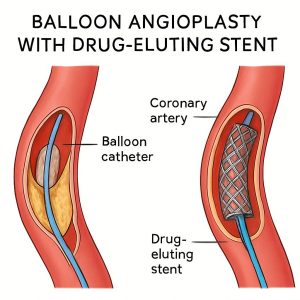
Definition: A procedure where a blocked artery is opened with a balloon and a small, mesh tube (stent) coated with a slow-release drug is permanently placed to keep the artery open.
Procedure Steps:
1. Balloon angioplasty is performed first to pre-dilate the blockage.
2. A second catheter with a collapsed stent over a balloon is positioned at the site.
3. The balloon is inflated, expanding the stent and locking it into place.
4. The balloon is deflated and removed, leaving the stent behind.
5. Sometimes a second, high-pressure balloon is used to ensure the stent is fully expanded.
Purpose / Benefits:
• Purpose: To open a blocked artery and prevent it from re-narrowing (restenosis).
• Benefits:
o The drug on the stent helps prevent scar tissue growth inside the stent, significantly reducing the chance of the artery closing again compared to a bare-metal stent.