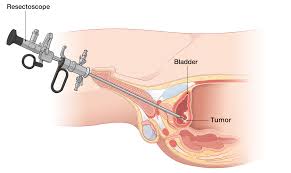
Definition: A procedure to diagnose, stage, and remove abnormal tumors from the bladder lining using a resectoscope passed through the urethra.
Procedure Steps:
1. Anesthesia: Spinal or general anesthesia.
2. Access & Resection: A resectoscope is inserted. A wire loop uses electrical current to shave off the tumor(s) and send them to pathology.
3. Coagulation: The base of the tumor is cauterized to stop bleeding.
Purpose / Benefits:
• Purpose: The primary treatment for non-muscle-invasive bladder cancer.
• Benefits:
o Both diagnostic (determines cancer grade and depth) and therapeutic.
o No external incisions.