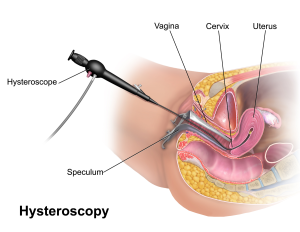
Definition: A procedure that allows a doctor to look inside the uterus using a hysteroscope—a thin, lighted tube with a camera—inserted through the cervix.
Procedure Steps:
1. Anesthesia: Can be done with local, regional, or general anesthesia, depending on the purpose.
2. Insertion: The hysteroscope is passed through the vagina and cervix into the uterus.
3. Expansion: A fluid or gas is used to expand the uterine cavity for better visibility.
4. Inspection & Procedure: The uterine lining is examined. Surgical instruments can be passed through the hysteroscope to perform procedures like polyp removal or biopsy.
Purpose / Benefits:
• Purpose: Used for both diagnosis and treatment of intrauterine problems.
• Benefits:
o Minimally invasive, no abdominal incisions.
o Can diagnose causes of abnormal bleeding, infertility, or recurrent miscarriage.
o Can be used to remove polyps, fibroids, or adhesions inside the uterus.