
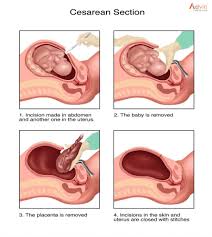
Definition: A surgical procedure to deliver a baby through incisions made in the mother’s abdomen and uterus.
Procedure Steps:
1. Anesthesia: Typically an epidural or spinal block is used, so the mother is awake but numb from the chest down. General anesthesia is used in some cases.
2. Preparation: The abdomen is cleaned, and a urinary catheter is inserted.
3. Incision:
o Abdominal Incision: Usually a horizontal “bikini line” incision just above the pubic hairline.
o Uterine Incision: A horizontal incision is made in the lower part of the uterus.
4. Delivery: The baby and then the placenta are delivered through the incisions.
5. Closing: The uterus and abdomen are closed with sutures.
Purpose / Benefits:
• Purpose: To deliver a baby when a vaginal birth is risky or impossible for the mother or baby.
• Benefits:
o Can be life-saving in emergencies (e.g., fetal distress, placental abruption, umbilical cord prolapse).
o Planned for medical reasons like placenta previa, certain fetal positions, or multiple births.
Avoids the potential trauma of a difficult vaginal delivery.
These are not surgical operations but methods for anesthesia and pain management.
TAP Block (Transversus Abdominis Plane Block)
Definition: An injection of local anesthetic into a specific nerve plane in the abdominal wall. It is performed after surgeries like C-sections to numb the area.
Purpose / Benefits:
- Purpose:To provide effective pain relief from the surgical incision after the operation.
- Benefits:Significantly reduces the need for opioid painkillers, thereby minimizing their side effects like nausea, vomiting, and drowsiness.
PCA (Patient-Controlled Analgesia)
Definition: A system that allows a patient to self-administer a preset dose of pain medication (usually an opioid like morphine) intravenously by pressing a button.
Purpose / Benefits:
- Purpose:To provide effective, continuous pain relief after major surgery.
- Benefits:Gives the patient a sense of control over their pain. Small, frequent doses maintain a steady level of pain relief, which is often more effective than larger, intermittent doses from a nurse.